viewof use = Inputs.form({
  flow: Inputs.range([200, 2000], { step: 10, value: 800, label: "Flow volume (mL/min)" }),
  diam: Inputs.range([2, 10], { step: 0.1, value: 6, label: "Cephalic vein diameter (mm)" }),
  stenosis: Inputs.radio(new Map([["No", false], ["Yes", true]]), { value: false, label: "≥50% luminal stenosis" }),
}, {
  template: (inputs) => html`<fieldset><legend>4–6 week ultrasound</legend>${Object.values(inputs)}</fieldset>`,
})Unassisted use
Probability of successful unassisted radiocephalic AVF use within 1 year, from the 4–6 week ultrasound
Heindel P, et al. Predicting radiocephalic arteriovenous fistula success with machine learning. npj Digit Med. 2022;5:160.
NoteHow the inputs are defined
All three inputs come from the duplex ultrasound performed 4–6 weeks after AVF creation.
- Flow volume
- Access flow volume: the mean of three measurements in the cephalic vein 5 cm above (proximal to) the anastomosis.
- Cephalic vein diameter
- Outflow (cephalic) vein lumen diameter, measured twice at each of three forearm locations (3 cm above the anastomosis, mid-forearm, and just below the antecubital fossa), averaged into one value.
- ≥50% luminal stenosis
- ≥50% narrowing of the lumen anywhere along the access.
Definitions follow the methods of Heindel et al., npj Digit Med 2022.
Model details
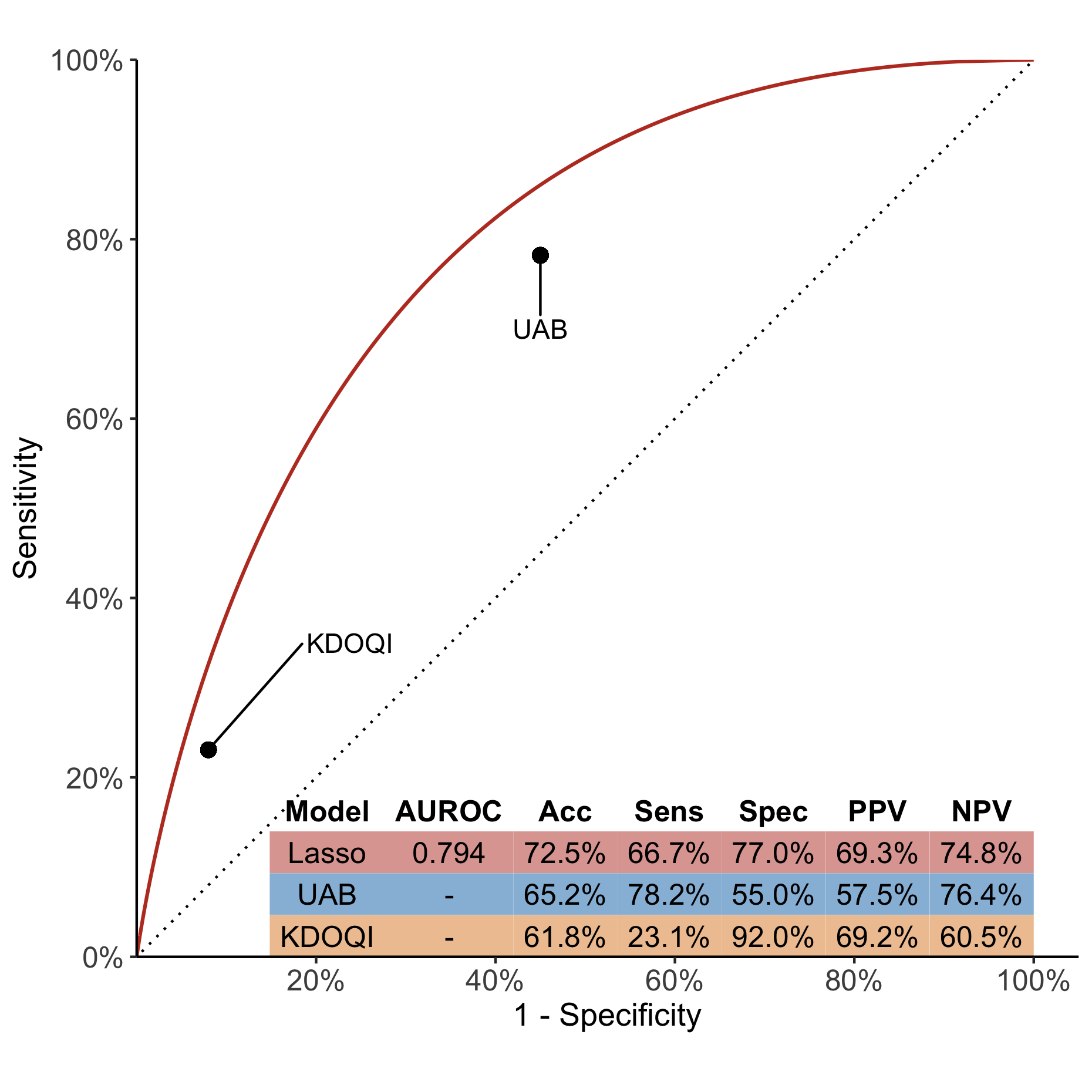
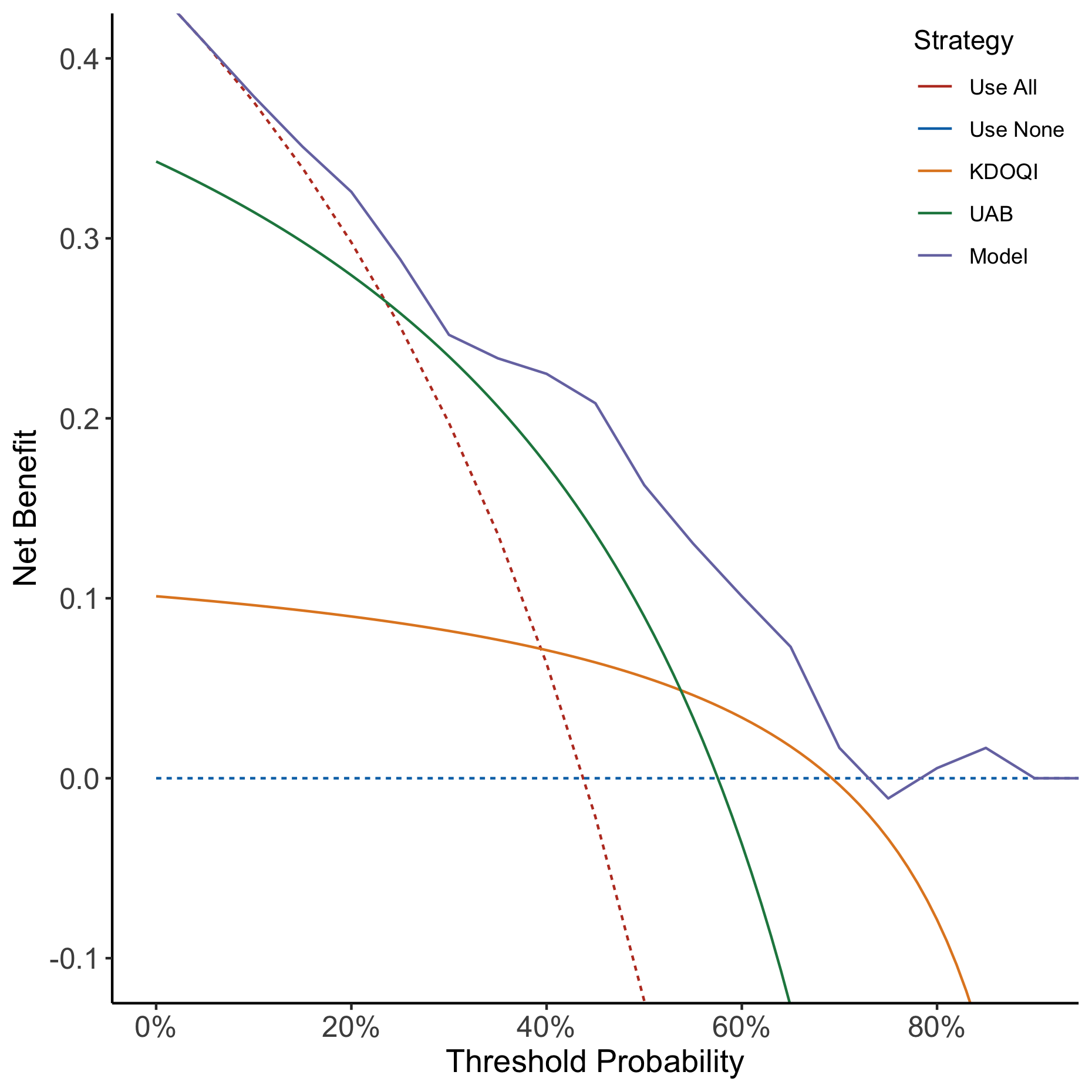
Take-home point: following radiocephalic AVF creation, a simplified model-based calculator containing only 4–6 week ultrasound parameters (flow, vein diameter and stenosis) performed better than both the UAB and KDOQI threshold criteria in predicting successful unassisted AVF use by 1 year after RC-AVF creation.
Details: the calculator uses a logistic regression model with lasso variable selection, chosen after assessing multiple machine learning models.
The models were trained and tested on pooled patient-level data from the 2014–2019 international multicenter randomized controlled trials PATENCY-1 and PATENCY-2 (ClinicalTrials.gov NCT02110901 and NCT02414841). These trials prospectively tracked outcomes after new radiocephalic arteriovenous fistula (RC-AVF) creation in 914 patients with advanced chronic kidney disease. The outcome is successful unassisted AVF use within 1 year of RC-AVF creation, defined as 2-needle cannulation for hemodialysis for ≥90 days without a preceding procedural intervention. Routine ultrasounds were performed 4–6 weeks after surgery to assess AVF maturation.
Model building considered these 4–6 week ultrasound measurements and 23 baseline clinical factors, including age, sex, race, smoking status, diabetes, hemodialysis status at the time of AVF creation, AVF location, enrolling-site volume and anesthesia modality. Six modeling strategies were compared: logistic regression, lasso, elastic net, CART, random forest and boosted trees. The lasso model performed as well as much more complex models and retained only three ultrasound variables. It retained no baseline characteristics, which suggests that ultrasound parameters matter most for predicting unassisted use after AVF creation. The model performed better than the Kidney Disease Outcomes Quality Initiative (KDOQI) and University of Alabama at Birmingham (UAB) ultrasound criteria in predicting 1-year unassisted AVF use.
More details are in the open-access publication. The 3-year outcomes from the trial registries are reported here.
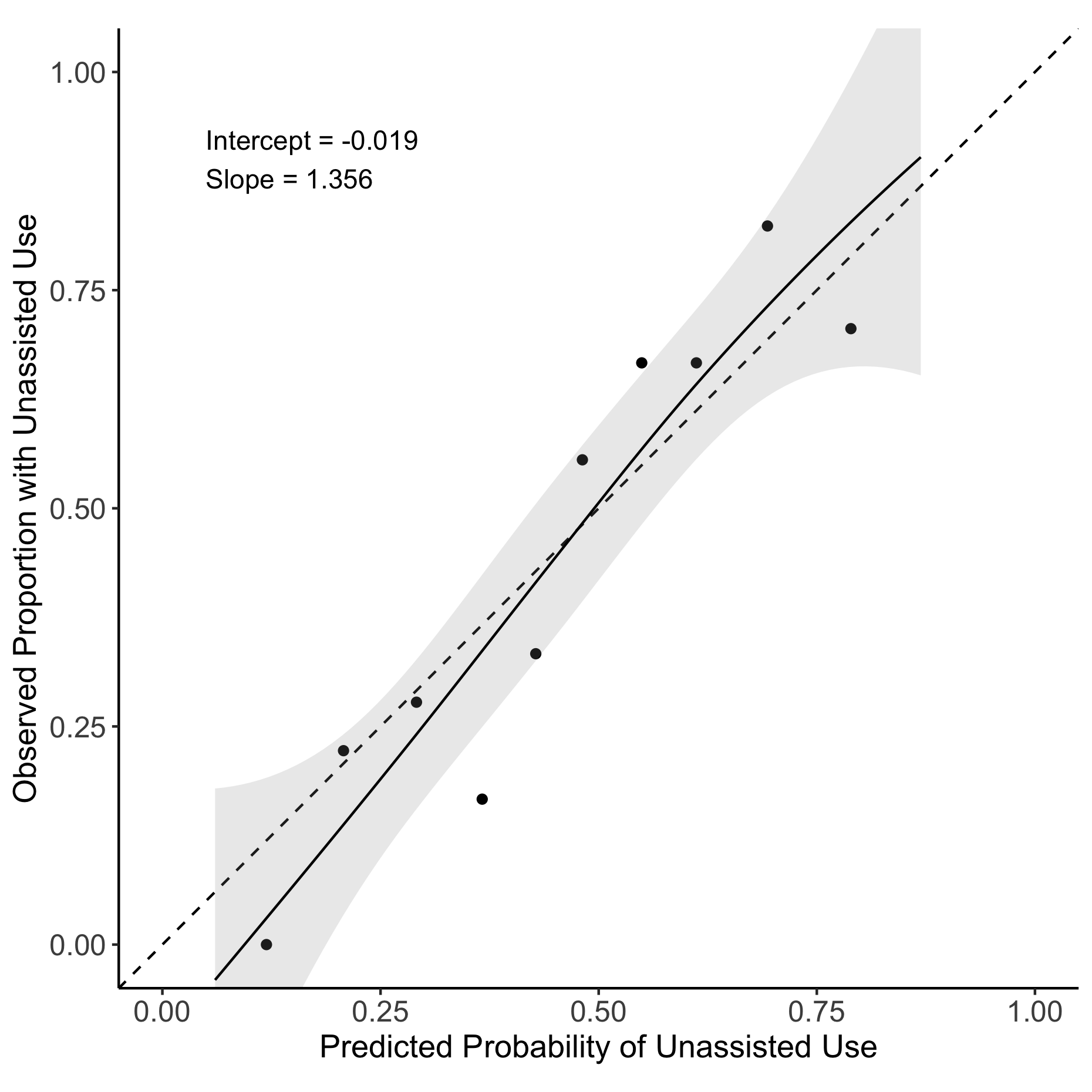
Performance in the test set